Tuesday, June 23, 2009

The God of All Grace

Eli, I've been really struggling to come to grips with my own salvation and what it means to be saved by grace through faith and not of ourselves. Scripture on one hand talks as if we're saved entirely by God and we can be entirely passive while God amazingly saves our souls. On the other hand though, it talks as if it's dependent on us and our salvation is gained by us. I just can't come to grips with this.


Brother,

I have shared your struggle, and there are answers, though let us remember that God has hidden his wisdom in a mystery that can only be revealed to men by the Spirit, so if we find ourselves wrestling with questions and difficulties it should not surprise us - it should drive us to our knees for grace to help us in our time of need. We are needy people who are entirely dependent on the Spirit. Nothing is by our might, but by God's Spirit alone. Those who know this groan, and those who don't deceive themselves with vain confidence.

Ephesians 2:8 is simple, as it was meant to be. "For by grace are ye saved through faith." Grace is how we are saved. Faith is the instrument by which grace save us. Swallowing is what brings bread down to my stomach, but swallowing does not fill me. Bread is what fills my stomach and gives nutrients to my body, though without swallowing I would never benefit from the bread. Likewise, faith does not save us, though grace comes to us through faith. If all we had was faith we would still be totally condemned, for as long as the law stands against us faith avails nothing, because all that would count is whether we kept the law (see Romans 4:14-16). Therefore, there must something that faith brings to save us. As Romans 5:1-2 shows us, faith brings us into the grace of our Lord Jesus Christ, so that by faith we believe unto righteousness - the perfect righteousness of Jesus that is not ours, yet is accounted as ours. I think you know this already. This is the grace that the apostle is talking about in Ephesians 2:8 which saves us. Any man who is saved by grace must first believe in order to access that grace. That is what the preachers of the gospel do: they present the grace of Christ - the gift of righteousness - to people (the bread of heaven), and then they command them to believe (swallow). God commands/invites/beseeches everyone to believe, and the Bible refers to faith as "the obedience of faith" (Romans 1:5, 16:26), because by believing they obey God. "Obeying the gospel" (2 Thess. 1:8; 2 Pet. 4:17) is believing the good news of peace in Jesus Christ (Ephesians 1:13). This obedience of faith is repentance. A person turns away from whatever other thing he was believing and submits to the righteousness of God in Christ for salvation (Romans 10:3). Repentance is believing God: turning to God by faith in Christ, acknowledging that you are a sinner who cannot save yourself and submitting to/receiving the gift of imputed righteousness through Christ. You never find Paul in the book of Romans talk about repentance as if it were a turning away from a sinful lifestyle (not because we don't want to but because we cannot for justification!). Such a concept is not once mentioned! He affirms again and again that ungodly men are at once justified by faith in Christ: "But to him who works not, but believes on Him who justifies the ungodly, his faith is counted [Gr: unto] righteousness." (Romans 4:5) Faith is simple, easy, effortless - it is not a work; it is a rest from work and is simply trusting in the promise of Another (Hebrews 6:17-18). Faith is what receives the promise of grace, and grace does all the saving. But if it's so easy, why don't more people believe?

Ephesians 2:8 does not end there, however, for Paul reveals to us something further about faith: "...and that not of yourselves: it is the gift of God." The only "that" that Paul could be talking about here is faith. He wouldn't even need to attach this additional clause were the issues of regeneration and election not even real - the verse would have been perfectly complete and coherent: "For by grace are you saved through faith: not of works lest any man should boast." Nor is Paul, by this second clause, simply restating the first part of the verse, for the "and" let's us know that he is not restating but adding to what he has said. But why add this extra phrase then, Paul? What are you getting at? Why did you need to say that: isn't it within the ability of every man to believe? Paul is not bringing in any shockingly new concept, for already in the letter he has spoken of election and regeneration in the prior chapter and half. But here he must bring it up again. A point of clarification is necessary.

The problem of belief/unbelief has nothing to do with ability or inability but with the heart. Every man has Christ offered to him, and God does not mock men with the gospel. He does not offer them life only to taunt them since they actually have no ability to receive it. May such a thought be removed far from us! God offers to all men the gift of righteousness freely and every man has the ability to choose whether they will receive it or reject it, thus making all men accountable for their choice. Men do not burn in hell because God rejected them but because they rejected God, and hell is a place where their guilt will be keenly known. No one will accuse God of not being merciful, for "whosoever shall call upon the name of the Lord shall be saved." (Romans 10:13) They did not believe, and therefore they are lost. But the reality is, as is revealed to us in the Scriptures and by the Holy Spirit, is that not one (and there are no exceptions) will obey God and believe as He commands them to. Though all most certainly can, none will, thus adding guilt upon guilt. The issue is not ability, but unwillingness: "O Jerusalem, Jerusalem, thou that killest the prophets, and stonest them which are sent unto thee, how often would I have gathered thy children together, even as a hen gathereth her chickens under her wings, and ye would not!" (Matthew 23:27) "All day long I have stretched forth my hands unto a disobedient and gainsaying people." (Romans 10:21; see also Isaiah 28:12, 30:15, Jer. 29:19) It is in this recognition of the basic depravity of man (not that man cannot do any good, but that man will not do that good which is required of him) that we learn that the only hope for man is in the electing mercy of God, who "quickens whom He will" (John 5:21) and "has mercy on whom He will have mercy" (Romans 9:15). The promise of the new covenant is unlike the old covenant, which depended on us writing the laws on our hearts (Deut. 6:6-9). In the new covenant God alone is the one who takes away our old hearts of stone and gives us new ones; He puts His fear into our hearts and He does all the writing, all the saving and all the keeping. (Read Hebrews 8:6-12 carefully and ask yourself: "With whom was fault found in the old covenant? Who does what in the new covenant?") God will do that which we would not do ourselves. He circumcises our hearts so that we respond to His voice and believe on Christ. He takes away our unwillingness so that we willingly take refuge under His wing. Everyone who comes to Christ must first be drawn by the Father (John 6:65). Whoever hears God's word and believes must first be born of God (regenerated/quickened) by the Spirit (John 8:47; 1 John 4:5-6, 5:1). By this all the glory and work of salvation is actually God's, even though from a "street level" it may not seem that way. It appears as if the man was simply willing to believe... and in truth he was! But it was because of God. And so we give God the glory whenever we are willing and obedient (Philippians 2:13; 1 Cor. 4:7; Acts 13:48, 16:14), and whenever we are not willing or obedient it is we who are to blame. The mercy of God is what makes the difference, and God is not under obligation to prevent us from sinning, but He shall be praised when He does. Glory to God who has mercy on hardened rebellious sinners who otherwise would kick against the goads all the way to hell!

This almost always causes offense or fear, for we feel much safer when we are in control. It is more acceptable and comfortable to be an Arminian, but if we only knew the depths of rebellion that is in our own hearts, we would fear if the lot was in our hands! A dear sister cried, "Oh, if it is up to me I know I will not be saved!" We also fear that God will not choose us because we are still so gripped by self-righteousness: "God won't choose me because I'm too bad of a sinner. He elects those who are better than I." What a lie! God delights in saving sinners, and you are a sinner, and He has already invited you! Pour out your complaint before Him, for He is merciful and will never be accused of being unmerciful. Call out to God for salvation from yourself. Cry to Him: "God, circumcise my heart and take away my unwillingness! I need you to believe you!" That God is able to save unwilling sinners is the greatest of all wonders the Arminian knows nothing about. What a comfort to know that Jesus Christ died on the cross also for unbelief and unwillingness, for they too are sins - perhaps the very worst. And He died for our sins. There is hope for real sinners.

So grace is multifaceted: we are saved by grace, the grace of the imputed righteousness of Christ unto all who believe (Ephesians 2:8a). But we are also saved by grace, in that God's grace comes to us even before we believe, it meets us at our deadness, and gives the gift of faith through the power of the Holy Spirit. "Even when we were dead in sins, hath quickened us together with Christ, by (grace ye are saved;)" (Ephesians 2:5). Have you ever noticed that... that twice in this chapter it mentions we are saved by grace? But one refers to the gift of righteousness, and the other to the gift of regeneration. Both are by the grace of God, who is "the God of all grace" (1 Peter 5:10). Where would any of us be were it not for the relentless, pursuing, lavishing grace of God?

I love you brother. Hang in there, and put all your hope fully in the grace of our mighty God.

Yours sincerely,
-Eli

Tuesday, June 16, 2009

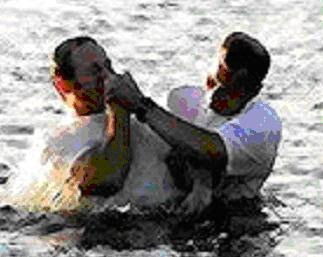
Does Baptism Wash Away Our Sins?

The following letter was written to a sister in Christ who asked me a question concerning a teaching she had heard: that baptism washes away sins.


Hello M-----,

No, I strongly disagree with that statement. God has forgiven us of our sins, and yet we still need to bury them? By baptism? That's absurd. If what he says is true, that we, as Christians, carry sins around like garbage and need to put them in the garbage can by baptism, does that mean you need to be baptized again and again every time you sin? The Mormon's Sunday sacrament would suggest this. Mormons essentially renew their baptism every week and believe that they are washing away their sins by doing so. This is folly, and ignorant of God’s salvation.

No matter how you slice it, there is only one way that sins are forgiven: that is through the death of Jesus Christ. Water does not remit sin, blood does. And not any blood, but only the blood of the Lamb of God who takes away the sins of the world. Our sins are not forgiven only to continue to defile us. Our sins are "removed as far as the east is from the west" through the blood of Jesus. (Eph. 1:7; Col. 1:14) "Unto him that loved us, and washed us from our sins in his own blood." (Rev. 1:5) "The blood of Jesus Christ his Son cleanseth us from all sin." (1 John 1:7) "For this is my blood of the new testament, which is shed for many for the remission of sins." (Matt. 26:28) It is unnecessary to go through the whole Bible to prove this point; there is no question that remission of sins comes to us solely through the death of Christ - by the blood of the new covenant.

Therefore, we must recognize that wherever the remission of sins is mentioned in Scripture it is directly connected to the death of Christ the Lamb of God, though there be no actual mention of His death in the text itself. For example, when we read in the Old Testament, "Thou hast forgiven the iniquity of thy people, thou hast covered all their sin. Selah." (Psalm 85:2), we see that no mention of Jesus is made, but we know without a doubt that Jesus is in direct view. How are their sins forgiven? How will God cover their sins? By the Messianic sacrifice. It need not be mentioned for us to understand. Another example, "Be it known unto you therefore, men and brethren, that through this man is preached unto you the forgiveness of sins." (Acts 13:38) We know that, though the death of Christ is not mentioned in this text, it is unmistakably connected. The forgiveness of sins comes to us "through this man" because of his atoning death on the cross. It need not be mentioned for us to understand. Wherever the remission of sins is spoken of, there we must also read between the lines the unspoken basis for that remission: the death of Christ (not create some new and unheard of basis of which the Scriptures know nothing about).

Water does not remit sins. We are not washed from our inward corruptions by external purifications! Shall we attempt to go back under the law of rituals and purifyings which could do nothing to cleanse a guilty conscience? Do we honestly think that a poor stricken conscience that is burdened by the guilt of sin will be satisfied to hear that a water baptism has purified it before God? No! There's no sound basis for relieving the conscience in that. Such external rituals cannot bring peace to a guilt-ridden soul. "Which was a figure for the time then present, in which were offered both gifts and sacrifices, that could not make him that did the service perfect, as pertaining to the conscience; Which stood only in meats and drinks, and divers washings, and carnal ordinances, imposed on them until the time of reformation. But Christ being come a high priest of good things to come, by a greater and more perfect tabernacle, not made with hands, that is to say, not of this building; Neither by the blood of goats and calves, but by his own blood he entered in once into the holy place, having obtained eternal redemption for us. For if the blood of bulls and of goats, and the ashes of a heifer sprinkling the unclean, sanctifieth to the purifying of the flesh: How much more shall the blood of Christ, who through the eternal Spirit offered himself without spot to God, purge your conscience from dead works to serve the living God?" (Heb. 9:9-14) Only the death of Christ, satisfying the just demands of the law on our behalf, declaring and upholding the righteousness of God, can bring peace. By this only can a man rest assured that the forgiveness of sins is offered to him lawfully and without presumption.

The misunderstanding is cleared up when we realize that water baptism, though nothing in and of itself, is the believers’ act of public identification with the one who died for their sins. Baptism was practiced before New Testament times - it was practiced when a Gentile would convert to Judaism. It was a means of identifying himself with the people of Israel and doing away with his old heathenish identity. The former life had passed away; dead and buried. This was the imagery of baptism. True New Testament baptism conveys a much deeper spiritual meaning. A person is spiritually born again and created anew in Christ. The old Adamic identity is crucified with Christ; dead and buried. The believer is quickened together with Christ to new identity in Him. All this is demonstrated by water baptism, a picture of the death, burial and resurrection of a believer with Christ.

In Acts 2:38, Peter's message to the international group of Jews who had gathered to witness the holy commotion which had occurred during Pentecost, was for them to believe that Jesus is the Messiah whose death and resurrection was the fulfillment of prophecy... prophecy that foretold of the suffering servant who would be put to death for the justification of sinners (Isaiah 53). This message was central to all the early Christian preaching: "But those things, which God before had showed by the mouth of all his prophets, that Christ should suffer, he hath so fulfilled. Repent ye therefore, and be converted, that your sins may be blotted out." (Acts 3:18-19) Peter's message, and ours today, are the same: repent and be converted (turn to the Lord Jesus Christ and put your faith and trust in Him) and your sins will be forgiven through His atoning blood. Baptism, like the Gentile's baptism, is an act of conversion, though it in and of itself is nothing but an image or act which correlates to a true inward reality. The remission of sins does not come from the water of baptism, but by faith in the vicarious death of the suffering servant. Where remission is, there always is the death of Jesus Christ. Though the picture and imagery of baptism is used in Scripture as a means for explanation of the spiritual death and quickening of the individual in Christ, and baptism itself as a convenient reference point for conversion, it is always and only the blood of Jesus, applied by faith alone, that is the sole basis for the forgiveness of sins.

Because the basis of forgiveness is the blood of eternal covenant, the death of the Lamb of God has a once-and-for-all effect that is permanent and unchangeable. "For by one offering he hath perfected forever them that are sanctified." (Heb. 10:14) No repetition, no renewal. "For I will be merciful to their unrighteousness, and their sins and their iniquities will I remember no more." (Heb. 8:12) Now that's an unshakable promise!

I hope this is helpful for you, M-----. May the Lord bless you,
Yours,
-Eli

Monday, June 01, 2009

The Potter's Power Over the Clay

This message was preached on October 5, 2008 at Valley Church in Smithfield, Utah. "Hath not the potter power over the clay, of the same lump to make one vessel unto honor, and another unto dishonor?" Delivered with much "fear and trembling", this sermon is an exegesis of Romans 9:14-29 and an examination of the God's sovereign election in salvation. There is so much misunderstanding and confusion that surrounds the issue of election, and my hope is that this message will clear much of that away. The Church must not be ashamed of, or apologize for, God, and one of the greatest hindrances to our coming into the fullness of the stature of Christ is our failure to embrace this essential God glorifying truth: that salvation is all of God and not of man. Listen below:

Thursday, May 21, 2009

Come Unto Me, All Ye That Labor

The following is a response to an article entitled, "Keeping the Commandments and Enduring to the End" which quoted Matthew 11:28-30 after teaching that a person must "retain the remission of sins" by persistent obedience to the law and commandments of God. It cried for an answer.

Hi Ben, my name is Eli. I have a few comments about your article.

You quoted Matthew 11:28-30:

“Come unto me, all ye that labor and are heavy laden, and I will give you rest. Take my yoke upon you, and learn of me; for I am meek and lowly in heart: and ye shall find rest unto your souls. For my yoke is easy, and my burden is light.”

When Jesus said this, the last thing in His mind was the L.D.S. plan of salvation. In fact, the gospel of Mormonism is not easy... it is impossible, giving no rest to those who follow it. Jesus really meant, "Come unto me and I will give you rest." However, in Mormonism, coming unto Jesus means work, work, work.

When a person comes to Jesus in Mormonism, they must come by a strict requirement of repentance and obedience; a person must be worthy to come to Jesus. Even the definition of faith in L.D.S. doctrine is: "Having such trust in Christ that we obey whatever he commands. There is no faith where there is no obedience." (Gospel Principles, p.118) Spencer Kimball said, "Faith involves doing everything we can." (Faith Precedes the Miracle, p.205) "We have to work at it." (ibid.) No rest here.

In Mormonism, a person must be worthy to be baptized. Repentance precedes all the blessings in the L.D.S. religion. Nothing comes for nothing, as you yourself have written. Joseph Smith taught: "All those who humble themselves before God, and desire to be baptized, and come forth with broken hearts and contrite spirits, and witness before the church that they have truly repented of all their sins . . . shall be received by baptism into his church." (D&C Section 20:37) What is repentance? As taught by Smith himself and the L.D.S. Church, repentance is only repentance if there is a complete forsaking of sin. "By this ye may know if a man repenteth of his sins—behold, he will confess them and forsake them." (D&C 58:42-43) I know that you know this.

There is nothing easy about Mormonism. The opposite is true: Mormonism is impossible. The Jesus of Mormonism speaks with a soft, kind voice but asks for the impossible. He lays heavy burdens on men's shoulders which they are not able to carry.

And no Mormon can make an excuse, such as, "He knows I will fail." "He only asks me to try." "He knows I'm only human." The late President Spencer W. Kimball said concerning these excuses: "There is one crucial test of repentance. This is the abandonment of the sin... The saving power does not extend to him who merely wants to change his life... Nor is repentance complete when one merely tries to abandon sin... To 'try' is weak. To 'do the best I can' is not strong. We must do better than we can." (The Miracle of Forgiveness, p. 163-165)

Kimball is not being untrue to Mormon Scripture. 1 Nephi 3:7 removes any excuse from people who say what the Lord asks is too hard, too difficult: "For I know that the Lord giveth no commandments unto the children of men, save he shall prepare a way for them that they accomplish the thing which he commandeth them." Therefore, whatever God commands He expects you to do, and you have no excuse for not doing it. Your best IS obedience. All that you can do IS all that God commands.

So the Mormon gospel isn't good news for sinners. Grace comes at a cost. Forgiveness requires work. The atonement cannot be received without repentance: "We accept Christ's atonement by repenting of our sins..." (Gospel Principles, p. 75) If you don't repent of all your sins, which even the Mormon Jesus said, "won't be easy, but it will be possible", then you haven't received the atonement and you are still lost and will perish in your sins.

Ben, have you repented of all your sins? If not, you have not accepted the atonement, your baptism is disqualified, and you will perish.

There is no excuse you can give, because the only reason you don't obey is because you don't exercise your free agency to obey, showing that you really have no faith, or real intent. As a Mormon, doesn't that concern you?

I've never met a Mormon who has repented. Mormons are trying to repent, but repentance isn't repentance until it's repentance. All Mormons are striving, not resting. The Jesus of Mormonism gives men a heavy yoke of labor which they continually fail to bear.

But the true Jesus of the Bible actually meant what He said when He said:

"Come unto me, all ye that labor and are heavy laden, and I will give you rest. Take my yoke upon you, and learn of me; for I am meek and lowly in heart: and ye shall find rest unto your souls. For my yoke is easy, and my burden is light."

The true gospel of Jesus Christ liberates us from striving to earn the impossible. Christ actually frees us from our own work and labors. "For he that is entered into his rest, he also hath ceased from his own works." (Hebrews 4:10) The good news of the gospel is that because we could not do any work for God (for all our righteousnesses are filthy rags in God's sight, Isaiah 64:6), Jesus Christ gave His life on the cross so that we could be fully forgiven and accepted by God through His shed blood and that alone. The New Testament teaches us that God promises eternal life freely to all those who simply receive Christ by faith. The moment a sinner believes on Christ alone, and ceases working, they are considered 100% righteous before God:

"Now to him that worketh is the reward not reckoned of grace, but of debt. But to him that worketh not, but believeth on him that justifieth the ungodly, his faith is counted unto righteousness." (Romans 4:4-5)

Wow! That is rest! Christians have rested in the finished work of Christ for them and have to do no works at all for their justification (being made righteous before God). Now they are free to serve God with thanksgiving and joy, not for hire! They are fully forgiven by the blood of Jesus (Colossians 1:13-14). "Having forgiven you all trespasses." (Colossians 2:13) None of their sins are anymore counted against them (Romans 4:6-8)! Eternal life is theirs! No separation from Heavenly Father!

That is how much God truly loves. Consider this example: Suppose you have a house that is entirely unpainted. The house represents your righteousness, and to the extend that it is painted is the extend that you are righteous. God doesn't "love" you insofar that He gives you a paint brush and a paint-can so that you can get to work painting your house (as in Mormonism). He loves you so much that He paints the whole house for you! For Mormons, the atonement of Christ is a means to WORK. But for Christians, the atonement of Christ is a means to REST, just as the Bible says.

Ben, Mormonism does not offer rest. The forgiveness of your sins is solely dependent on your personal obedience day by day, as you yourself have written. You have to work to "retain" the forgiveness of sins! The true rest Jesus gives is final because it does not depend on our works but upon Christ alone. The righteousness that He gives by virtue of Himself is steadfast and unchanging. The day you come to Jesus is the day you will understand His rest.

Ben, I pray that you would become overwhelmed with the heavy burden of Mormonism, realize that you are a vile sinner who disobeys God, that you would cry out to the real Jesus for deliverance from hopeless striving, and come to understand that it is only through the shed blood of Christ alone that you can be right with God.

Sincerely yours,
With loving concern,
-Eli

Thursday, May 07, 2009

Sonidos Extranos Del Campamento Pretribulacional

A brother from Mexico felt led to translate this article, "Strange Sounds from the Pretribulational Camp", into Spanish since there are very little resources on the end times in the Spanish language and pretribulationism seems to be dominating the Mexican churches. May God bless this translation for His truth's sake.


SONIDOS EXTRAÑOS DEL CAMPAMENTO PRETRIBULACIONAL
Por Eli Brayley

“Y si la trompeta diere sonido incierto, ¿quién se preparará para la batalla?”
1 Corintios 14:8

Nunca deja de asombrarme como la enseñanza de un rapto pretribulacional puede sacar conclusiones tan fantásticas de pasajes bíblicos tan directos. Alguien comprometido a un estudio honesto y objetivo de las interpretaciones presentadas por los defensores de la pretribulación, no puede pero notar las discrepancias flagrantes que inevitablemente surgen entre la supuesta doctrina y las inspiradas Escrituras. Un destacado teólogo alemán francamente declaró: “El pretribulacionismo debe ser refutado como una distorsión peligrosa de la escatología del Nuevo Testamento.”

Es mi intención, en este artículo, hablar de unas de las discrepancias escriturales más obvias que resultan de mantener una posición pretribulacional, con el fin de que los que lean las siguientes palabras puedan considerar la singularidad y error de esta doctrina del siglo XIX.

UNA SEGUNDA VENIDA ANTES DE LA SEGUNDA VENIDA

“Así también Cristo fue ofrecido una sola vez para llevar los pecados de muchos; y aparecerá por segunda vez, sin relación con el pecado, para salvar a los que le esperan.”
(Hebreos 9:28)

El término “Segunda Venida” en realidad nunca se encuentra en la Biblia, aunque el concepto ciertamente está ahí, así como la palabra “trinidad” no se encuentra en la Biblia; sin embargo, el concepto sin duda se encuentra en ella. Aunque el versículo mencionado arriba es el único que usa la palabra “segunda” en conexión con la futura venida del Señor, la creencia de que Jesús regresará a la tierra una segunda vez llena el Antiguo y Nuevo Testamento. Jesús anunció a sus discípulos la noche antes de ser crucificado: “…vendré otra vez, y os tomaré a mí mismo, para que donde yo estoy, vosotros también estéis” (Juan 14:3). De la misma manera, el ángel les anunció en el Monte de Olivos justo después que Cristo ascendió: “Este mismo Jesús, que ha sido tomado de vosotros al cielo, así vendrá como le habéis visto ir al cielo” (Hechos 1:11). La expectación de los apóstoles era que Jesús regresaría una segunda vez a la tierra de la misma manera en que él ascendió. Esto se muestra por el testimonio continuo y unánime de ellos con respeto a la venida de Cristo:

Pablo: “Porque el Señor mismo con voz de mando, con voz de arcángel, y con trompeta de Dios, descenderá del cielo; y los muertos en Cristo resucitarán primero. Luego nosotros los que vivimos, los que hayamos quedado, seremos arrebatados juntamente con ellos en las nubes para recibir al Señor en el aire, y así estaremos siempre con el Señor.”
(1 Tesalonicenses 4:16-17)

Pedro: “Pero el día del Señor vendrá como ladrón en la noche; en el cual los cielos pasarán con grande estruendo, y los elementos ardiendo serán deshechos, y la tierra y las obras que en ella hay serán quemadas. Puesto que todas estas cosas han de ser deshechas, ¡cómo no debéis vosotros andar en santa y piadosa manera de vivir, esperando y apresurándoos para la venida del día de Dios, en el cual los cielos, encendiéndose, serán deshechos, y los elementos, siendo quemados, se fundirán!”
(2 Pedro 3:10-12)

Juan: “He aquí que viene con las nubes, y todo ojo le verá, y los que le traspasaron; y todos los linajes de la tierra harán lamentación por él. Sí, amén.”
(Apocalipsis 1:7)

Noten que la expresión apostólica es simplemente la manifestación gloriosa y completa de nuestro Señor Jesús, y no distinguen entre dos. La razón por la cual nunca hacen distinciones entre la “segunda venida” y una “venida secreta pretribulacional” es porque ninguna dualidad de “venidas” existía en su doctrina. Los apóstoles enseñaban, simple y sencillamente, que Jesucristo vendría de nuevo.

En contraste, si los pretribulacionistas quieren permanecer consistentes con su teología, deben creer en tres venidas de Cristo, un concepto totalmente extraño a las enseñanzas del Nuevo Testamento. Ni Jesús ni los apóstoles jamás enseñaron tal cosa. Para evitar la vergüenza de tal conclusión, los pretribulacionistas tratan de retener la expresión “Segunda Venida de Cristo” mientras al mismo tiempo creer en una venida anterior a ella. No lo pueden tener de ambas maneras. Si dicen que el “rapto secreto” NO es una “venida”, descalifican todos los versículos que han usado para respaldar un rapto pretribulacional donde se usa la palabra “venida” (ve 1 Corintios 15:23, 1 Tesalonicenses 4:15, por ejemplo). Si dicen que el “rapto secreto” SI es una “venida”, entonces deben creer en tres venidas, y por lo tanto no tiene sentido lógico alguno mantener la expresión “la Segunda Venida de Cristo” para describir la manifestación final y gloriosa de Cristo.

UNA ÚLTIMA TROMPETA ANTES DE LA ÚLTIMA TROMPETA

“He aquí, os digo un misterio: No todos dormiremos; pero todos seremos transformados, en un momento, en un abrir y cerrar de ojos, a la final trompeta; porque se tocará la trompeta, y los muertos serán resucitados incorruptibles, y nosotros seremos transformados.”
(1 Corintios 15:51-52)

Uno de los versículos pretribulacionales más populares de la Biblia es 1 Corintios 15:51-52, citado arriba, ¡y sin embargo esta Escritura es de hecho uno de los argumentos más fuertes CONTRA el pretribulacionismo!

El contexto de este versículo está hablando de una resurrección de los muertos cuando Jesús venga. Pablo dice en versículos 22 y 23: “Porque así como en Adán todos mueren, también en Cristo todos serán vivificados. Pero cada uno en su debido orden: Cristo, las primicias; luego los que son de Cristo, en su venida“ (Noten de nuevo que no hay una distinción entre la segunda venida y una venida pretribulacional…solo “su venida”). La clave para interpretar cuando esta transformación ocurre (como si ya no fuera obvia) es la declaración: “a la final trompeta”. ¿Pero cuál es la trompeta final y donde se encuentra en las Escrituras?

No es difícil descubrir que la trompeta final de la cual habla la Biblia ocurre al final de los tiempos cuando Jesús regresa a la tierra en gran poder y gloria con todos sus santos ángeles. En las palabras mismas de nuestro Señor, dirigidas a los apóstoles en el discurso del monte de los Olivos, es declarado: “E inmediatamente después de la tribulación de aquellos días, el sol se oscurecerá, y la luna no dará su resplandor, y las estrellas caerán del cielo, y las potencias de los cielos serán conmovidas. Entonces aparecerá la señal del Hijo del Hombre en el cielo; y entonces lamentarán todas las tribus de la tierra, y verán al Hijo del Hombre viniendo sobre las nubes del cielo, con poder y gran gloria. Y enviará sus ángeles con gran voz de trompeta, y juntarán a sus escogidos, de los cuatro vientos, desde un extremo del cielo hasta el otro” (Mateo 24:29-31). La última trompeta y el juntar de los escogidos son sinónimos. Cuando la trompeta suena, indica a los cosechadores que deben ir y separar el trigo de la cizaña. Una sencilla comparación entre Mateo 24:29-31, 1 Tesalonicenses 4:13-18 y 1 Corintios 15:51-52 claramente revela el tiempo y la naturaleza de la última trompeta: su tiempo vendrá cuando Cristo venga al final de la gran tribulación; su naturaleza es que instiga el rapto, o juntar, de los santos. Después del evento descrito en Mateo 24:29-31, nunca más se profetiza que vendrá otra trompeta.

Por lo tanto, si los pretribulacionistas están usando 1 Corintios 15:51-52 para respaldar la idea de un rapto antes de la manifestación gloriosa de Mateo 24:29-31, se encuentran con dilema irreconciliable. ¿Cómo puede un rapto anterior tener la última trompeta si otra trompeta tiene que ser sonada al final de la gran tribulación? ¿Cómo puede 1 Corintios 15:51-52 estar hablando de alguna otra cosa sino la venida final de nuestro Salvador Jesucristo, como su contexto claramente muestra? O el versículo 52 verdaderamente está hablando de la última trompeta, o Pablo estaba terriblemente equivocado.

UNA PRIMERA RESURRECCIÓN ANTES DE LA PRIMERA RESURRECCIÓN

“Y vi tronos, y se sentaron sobre ellos los que recibieron facultad de juzgar; y vi las almas de los decapitados por causa del testimonio de Jesús y por la palabra de Dios, los que no habían adorado a la bestia ni a su imagen, y que no recibieron la marca en sus frentes ni en sus manos; y vivieron y reinaron con Cristo mil años. Pero los otros muertos no volvieron a vivir hasta que se cumplieron mil años. Esta es la primera resurrección. Bienaventurado y santo el que tiene parte en la primera resurrección; la segunda muerte no tiene potestad sobre éstos, sino que serán sacerdotes de Dios y de Cristo, y reinarán con él mil años.
(Apocalipsis 20:4-6)

La última discrepancia que examinaremos involucra la resurrección de los muertos, la cual doctrina es un principio elemental según Hebreos 6:1-2. Nuestro texto arriba claramente muestra que la primera resurrección toma lugar al final de la gran tribulación cuando Jesús regresa en gloria. Cristo regresa a la tierra y destruye al anticristo al final del capítulo 19 y los que son resucitados sufrieron grandemente bajo la ira de la bestia. Pero noten también que la primera resurrección no es exclusiva a solo los que pasaron por la gran tribulación; no, incluye todos los santos de Dios de todas las generaciones. Juan ve a todos los que sufrieron por causa de la Palabra, y declara en versículo 6: “Bienaventurado y santo el que tiene parte en la primera resurrección; la segunda muerte no tiene potestad sobre éstos, sino que serán sacerdotes de Dios y de Cristo, y reinarán con él mil años.” Esto es escrito para todos los creyentes, ya que todos somos “reyes y sacerdotes” para Dios porque “nos amó, y nos lavó de nuestros pecados con su sangre” (Apocalipsis 1:5-6). “Y cantaban un nuevo cántico, diciendo: Digno eres de tomar el libro y de abrir sus sellos; porque tú fuiste inmolado, y con tu sangre nos has redimido para Dios, de todo linaje y lengua y pueblo y nación; y nos has hecho para nuestro Dios reyes y sacerdotes, y reinaremos sobre la tierra” (Apocalipsis 5:9-10). El requisito para que la muerte segunda no tenga poder sobre ti es tomar parte en la primera resurrección. Todos los creyentes lograrán esto por la gracia de Dios.

A través de toda la Biblia solo hay una resurrección que los cristianos son prometidos e recibir. Ya hemos visto 1 Corintios 15:23. Jesús dijo en Juan 6:54: “El que come mi carne y bebe mi sangre, tiene vida eterna; y yo le resucitaré en el día postrero.” Él repite esta expresión “en el día postrero” cuatro veces en capítulo 6 para que nadie este confundido de cuando la resurrección ocurrirá. Si creemos en una resurrección secreta que toma lugar antes del último día entonces no estamos siguiendo la clara enseñanza de Jesucristo, nuestra Piedra Angular.

O Juan estaba correcto en decir que esta es la primera resurrección o los pretribulacionistas tienen la razón en decir que no lo es, y que hay una resurrección anterior en la venida secreta antes de la tribulación. ¡Qué locura! No hay ni una sola Escritura que respalda tal idea.

VERDAD O CONJETURA: TÚ DECIDE

En este pequeño artículo hemos brevemente examinado cómo la teoría de la pretribulación requiere 1) una venida, 2) un rapto y 3) una resurrección antes del tiempo claramente señalado en las Santas Escrituras. Depende de los pretribulacionistas en decidir si van o no a continuar tratando de exprimir la Palabra de Dios a través del filtro de la conjetura parcial, o si simplemente creerán la Biblia tal y como está escrita. En las palabras del difunto W.J. Erdman, el tercer pastor de Moody Church en Chicago que una vez fue un pretribulacionista y un editor de la Biblia de Referencia Scofield, antes de que “mas estudio de las Escrituras” le convencieran de lo contrario, dijo: “Mejor es la decepción de la verdad que las lindas pero falsas promesas del error.”

“Procura con diligencia presentarte a Dios aprobado, como obrero que no tiene de qué avergonzarse, que usa bien la palabra de verdad.”
(2 Timoteo 2:15)